Cutlery
Project context
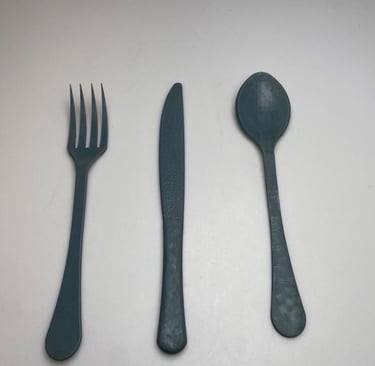
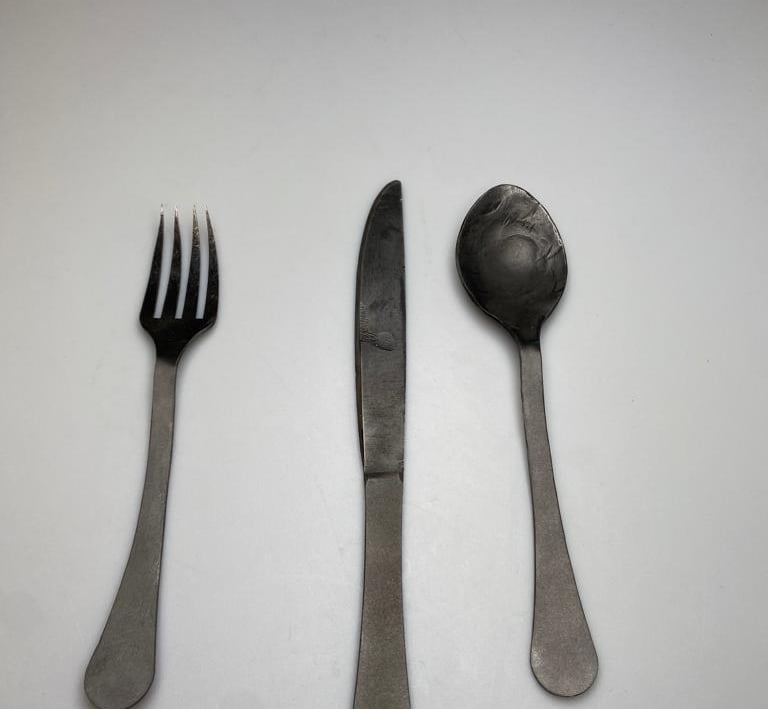
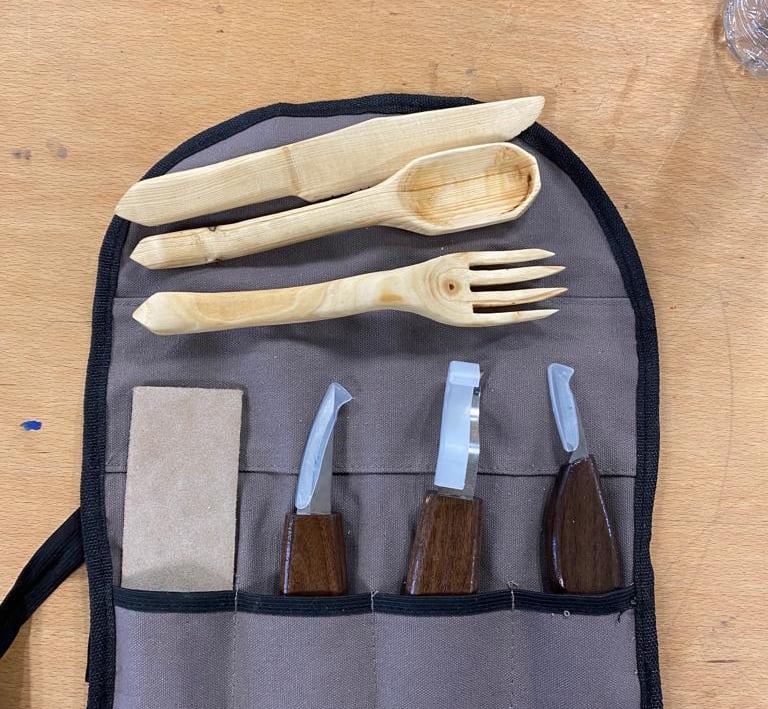
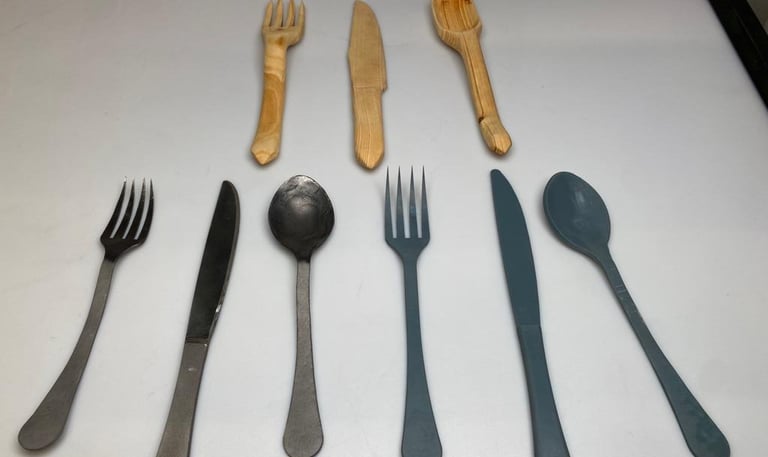
As part of a design assignment, I created a cutlery set consisting of a knife, fork, and spoon in three different materials: wood, plastic, and metal. The challenge was to design a set that not only functioned well but also followed the Fibonacci proportions, resulting in a collection with strong aesthetic harmony.


Approach
Using the IPO design process, I researched proportions and aesthetics, focusing on how Fibonacci’s golden ratio could be applied to everyday objects. I then developed three material variations:
A plastic set, designed digitally and produced with 3D printing.
A metal set, designed in CAD, cut with a waterjet, and hand-bent into shape.
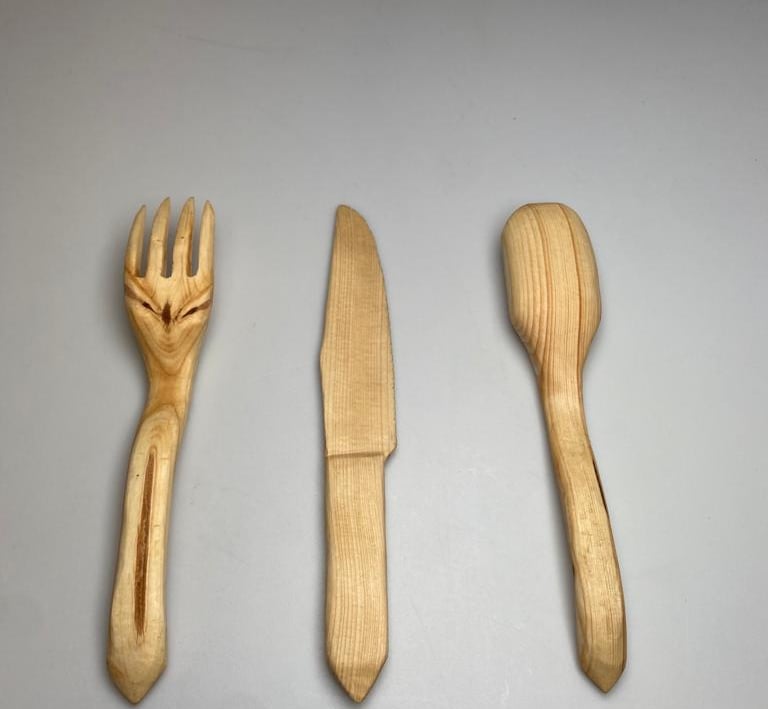
A wooden set, carved entirely by hand for a natural finish.
Tools & Techniques
IPO design process
CAD design & 3D printing (plastic version)
Waterjet cutting & manual forming (metal version)
Hand carving (wooden version)
Application of Fibonacci proportions in product design
Outcome
Reflection
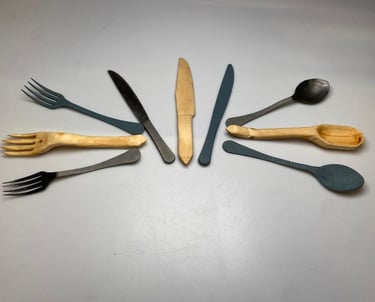
The result was a complete cutlery set that demonstrated how different materials and production methods can be used to achieve the same design language. Each version embodied the Fibonacci proportions, resulting in a coherent and aesthetically refined collection.
This project gave me deeper insight into designing with mathematical proportions and how these can influence aesthetics. It also allowed me to strengthen my practical skills across digital fabrication, metalworking, and woodworking combining theory and craftsmanship into a tangible result.

Gallery
A visual impression of the project.